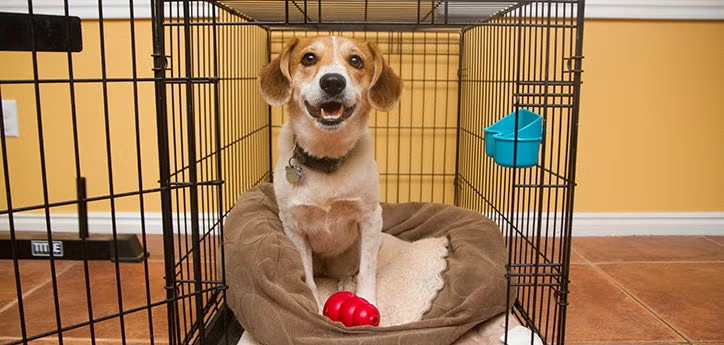
Bringing a new puppy home is exciting, but it also comes with plenty of questions, especially when it comes to crate training. When introduced properly, a crate can become a comfortable retreat where your puppy feels secure, rests well, and learns healthy habits. The key is consistency, positive reinforcement, and a gradual approach that respects your puppy’s pace. At Canine College in Holbrook, Massachusetts, we work with new puppy owners every week who are just beginning this process or feeling stuck partway through it. This article walks through how to start crate training, how to help your puppy feel comfortable, common mistakes to avoid, and how crate training fits into your puppy’s overall development.
How Do You Start Crate Training a Puppy?
Start by introducing the crate gradually, without expecting your puppy to spend long stretches inside right away. Place the crate in a common area and let your puppy approach it on their own terms. Toss in a few treats or a favorite toy so they associate the space with something enjoyable. Praise calm exploration, and avoid forcing your puppy inside or closing the door before they feel at ease.
Rushing this stage tends to backfire. A puppy who is pushed into the crate too quickly may begin to associate it with stress rather than comfort, which makes the entire process take longer. Short, positive sessions repeated consistently work far better than one long, forced attempt.
How Can You Help a Puppy Feel Comfortable in a Crate?
Comfort comes down to environment and routine. Place the crate somewhere your puppy already spends time, away from loud noises but still connected to the household activity. Add soft bedding and a familiar blanket or worn T-shirt with your scent on it. Many puppies settle in more easily when they do not feel isolated from their family.
Consistency matters just as much as comfort. Feeding meals near or inside the crate, using the same calm phrase each time your puppy enters, and maintaining a predictable schedule all reinforce that the crate is a normal, pleasant part of daily life. Over time, these small habits help your puppy feel more confident and secure, both inside the crate and throughout their day.
What Crate Training Mistakes Should You Avoid?
Many crate training struggles come down to a handful of common mistakes. Understanding these can save you time and frustration.
- Using the crate as punishment, which teaches your puppy to fear it
- Moving too fast before your puppy is ready for longer periods alone
- Leaving your puppy crated for excessive stretches without breaks for exercise, bathroom needs, or interaction
- Ignoring signs of distress, such as persistent whining or panting
- Being inconsistent with routines, which makes it harder for your puppy to know what to expect
Each of these mistakes interferes with your puppy’s ability to build trust in the crate as a safe space. Puppies need plenty of exercise, social interaction, bathroom breaks, and rest throughout the day. The crate should be one part of a balanced routine, not a substitute for attention or activity.
How Does Crate Training Fit Into Puppy Training?
Crate training works best as part of a broader training routine rather than a standalone task. It naturally complements housebreaking, since a properly sized crate encourages puppies to avoid soiling the space where they sleep. It also supports basic obedience and teaches your puppy how to settle down calmly, a skill that carries over into daily life at home.
At Canine College, our Puppy Kindergarten program is designed with this bigger picture in mind. Built for puppies between 9 and 16 weeks old, the five-week program covers basic obedience commands, socialization, housebreaking, crate training, and grooming, giving new owners a well-rounded foundation to build on.
When Should You Get Professional Help With Puppy Training?
If your puppy shows persistent difficulty adjusting to the crate, significant anxiety, destructive behavior, or ongoing housebreaking trouble, professional guidance can help. A trainer can observe your puppy’s individual behavior and develop an approach suited to their specific needs, rather than relying on generic advice.
Canine College offers both group and private training options for owners who want additional support, whether that means working through crate training struggles or addressing broader obedience concerns.
Ready to Get Started With Crate Training? Contact Canine College Today
Successful crate training relies on patience, consistency, and positive reinforcement, not force or rushed expectations. Every puppy learns at a different pace, and an individualized approach makes the process smoother for both of you. If you are working through crate training in Holbrook or anywhere across the Greater Boston and South Shore area, Canine College is here to help. Contact us at 781-767-3908 to learn more about our Puppy Kindergarten program or training options.